Mentoring the Shift from Solo Concept-Mapping to Team Aligned Framework
Through mentorship I scaled my go-to method into a shared UX tool.
If there is a design activity that I just love to do, that helps my process, understanding and adds incremental value to every project I do its concept mapping. It’s quick to complete and promotes quick understanding across an interdisciplinary group without a lot of back and forth. Concept mapping tells a story in an easy to understand visual way that shows how things are connected, surfaces opportunities and really just gives both the person who creates it and the person who consumes it an opportunity to think deeply about a problem or opportunity space.
Cross-functional teams spend ~8 hrs/week aligning on mental models — my goal is to reduce that via concept-maps adoption.
Why I love concept mapping
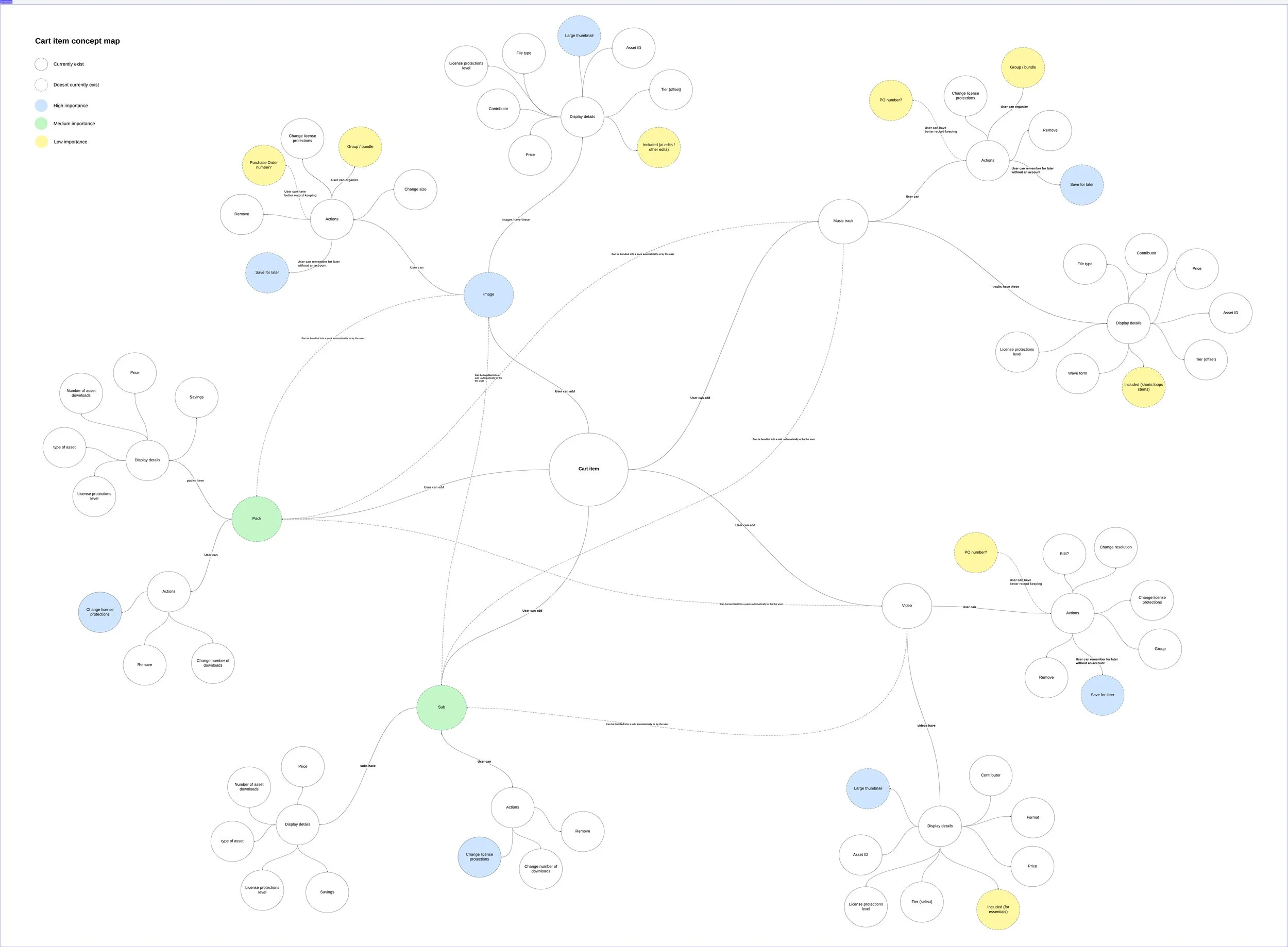
Concept map I created depicting the current state and future of cart at shutterstock.
A quick story about concept mapping and the power of mentorship
I lead a small team of product designers in our e-commerce business, we work on things like conversion, pricing and packaging, and cart and checkout. As a lead designer I help grow my team’s skill sets as well as improve processes across product design and product management. Recently I coached 4 designers and 6 PMs over 2 weeks to adopt the framework.” Below is an example of a team members concept map used to gain alignment on a project.
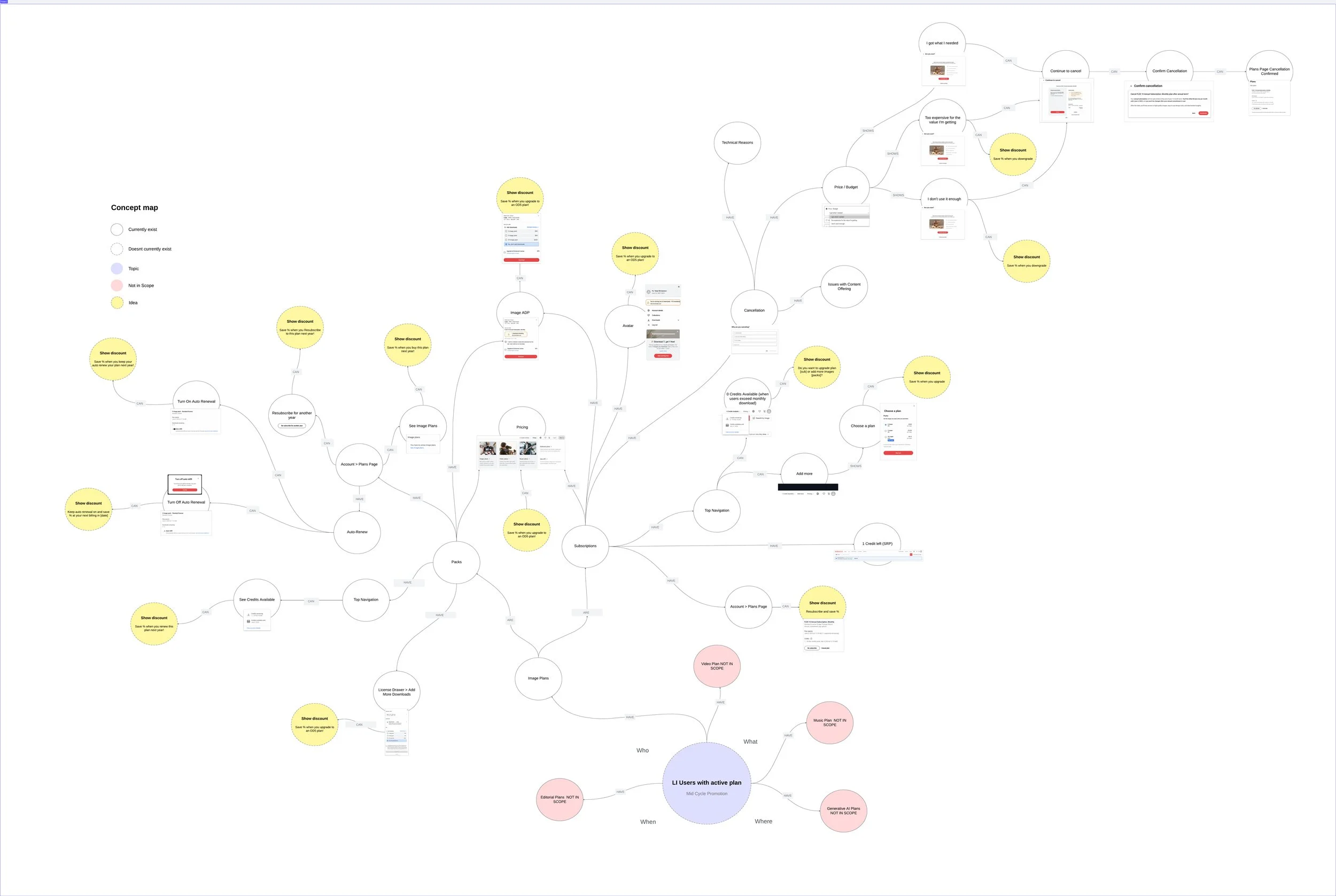
You can see above that screenshots were added to really help the consumer of this map understand the story. After explaining concept maps, cross-team alignment meetings dropped by 30% and, design rework decreased by 12% saving the team time and by extension the company money.
How can we make concept mapping even more powerful?
I’ve been thinking… What if we added quantitative data to the map. Or even qualitative quotes from users. To make the story more powerful to increase the understanding of the level of opportunity or in some cases show that there really isn’t an opportunity in this space. This Is why I love concept maps. They can be that flexible thing that brings common understanding.